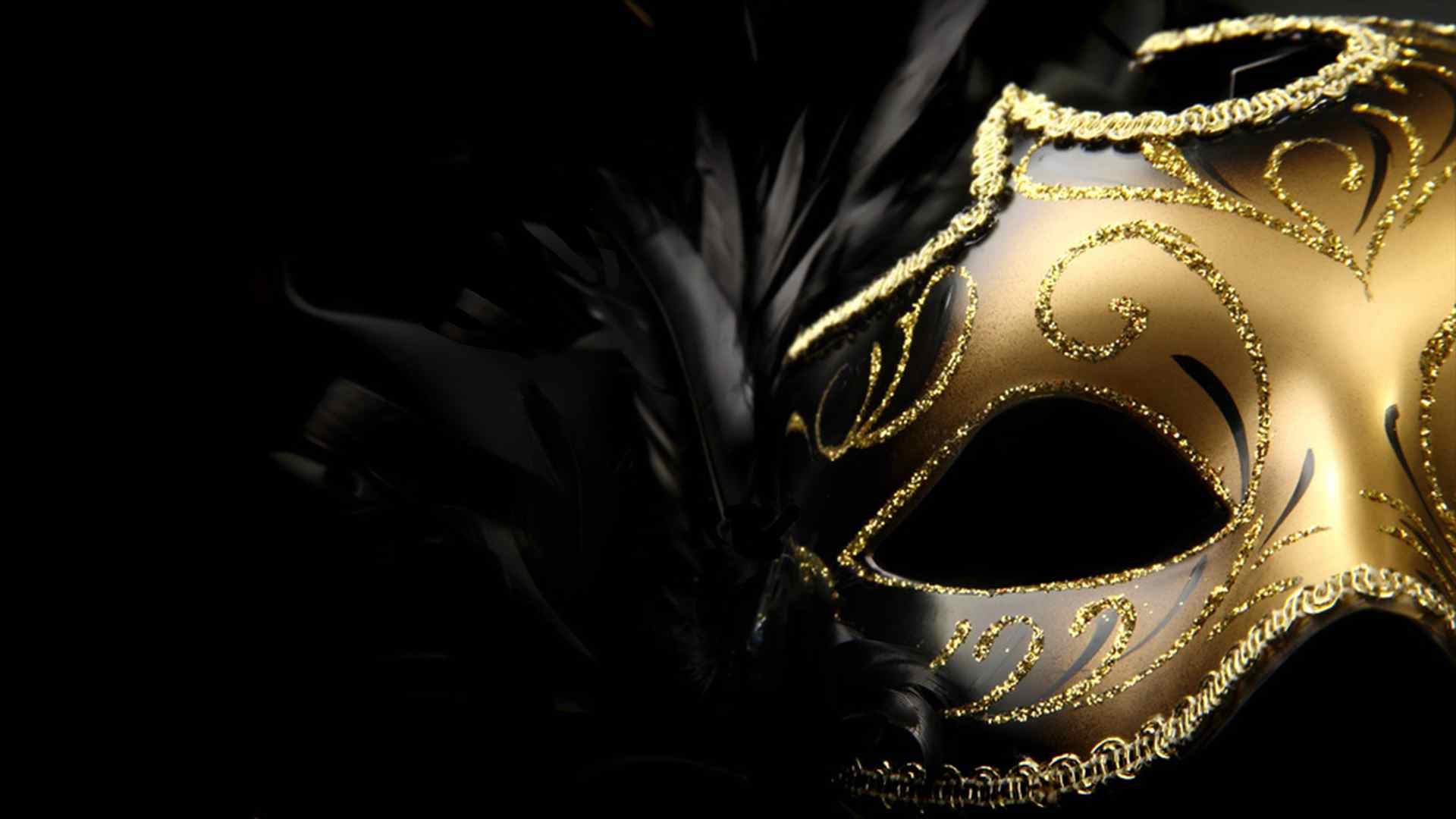
THE MASQUE OF THE RED DEATH
by Edgar Allan Poe
(1842)
THE "Red Death" had long devastated the country. No pestilence
had ever been so fatal, or so hideous. Blood was its Avatar and its seal --the redness and the horror of blood. There were sharp pains, and sudden dizziness, and
then profuse bleeding at the pores, with dissolution. The scarlet stains upon
the body and especially upon the face of the victim, were the pest ban which
shut him out from the aid and from the sympathy of his fellow-men. And the whole
seizure, progress and termination of the disease, were the incidents of half an
hour.
“the redness and the horror of
blood”- This would be a good focus for the
performance. We could focus on the ‘horror’ aspect and one of the scenes within
the performance could focus on the build-up of the disease.
“were sharp pains, and sudden
dizziness” – This could create movement ideas
within the scenes. We could act as though we were experiencing the sharp pains
and the dizziness to help communicate to the audience that the disease is being
caught. This could be done in the style of Artaud as it would get the audience
involved and my making the audience on the edge of their seats and feeling
uncomfortable it would communicate to the audience what we as the cast members
are feeling or are pretending that we are feeling and this will really help
communicate the moral and the purpose of the performance to the audience.
But the Prince Prospero was happy and
dauntless and sagacious. When his dominions were half depopulated, he summoned
to his presence a thousand hale and light-hearted friends from among the
knights and dames of his court, and with these retired to the deep seclusion of one of his castellated
abbeys. This was an extensive and magnificent structure, the creation of the
prince's own eccentric yet august taste. A strong and lofty wall girdled it in.
This wall had gates of iron. The courtiers, having entered, brought furnaces
and massy hammers and welded the bolts. They resolved to leave means neither of
ingress or egress to the sudden impulses of despair or of frenzy from within.
The abbey was amply provisioned. With such precautions the courtiers might bid
defiance to contagion. The external world could take care of itself. In the
meantime, it was folly to grieve, or to think. The prince had provided all the
appliances of pleasure. There were buffoons, there were improvisatori, there
were ballet-dancers, there were musicians,
there was Beauty, there was wine. All these and security were within.
Without was the "Red Death."
“ballet-dancers, there were
musicians, there was Beauty”- We could use this
aspect of the story and link it with the below scene idea and we could take the
dancers of the group to create a mini scene of dance as we are then playing to
everyone’s strength as not everyone in the group are actors. To implement the
music idea, we could find a music track to have playing, and depending on time
and spacing, we could consider using the school orchestra to play in the scene
to really bring it alive and make it more realistic.
“But the Prince Prospero was
happy and dauntless and sagacious. When his dominions were half depopulated, he
summoned to his presence a thousand hale and light-hearted friends from among
the knights and dames of his court”- We could take
the idea of royalty and use it to generate performance possibilities as we
could have a scene where we are acting being at a masquerade ball and this
could be the climatic part of the performance and it could be where people
start to catch the disease, or this scene could be placed at the end of the
performance where the mask is revealed as a metaphorical mask for the disease
itself. This scene could be created following the naturalistic movement that
Stanisklavski used as a ball is scene annually in schools so therefore it is
easy for the audience to relate to and easy for us as cast members to devise a
scene for.
It was toward the close of the fifth or sixth month of his seclusion,
and while the pestilence raged most furiously abroad, that the Prince Prospero
entertained his thousand friends at a masked ball of the most unusual
magnificence.
It was a voluptuous scene, that masquerade. But first let me tell of the
rooms in which it was held. There were seven --an imperial suite. In many
palaces, however, such suites form a long and straight vista, while the folding
doors slide back nearly to the walls on either hand, so that the view of the
whole extent is scarcely impeded. Here the case was very different; as might
have been expected from the duke's love of the bizarre. The apartments were so
irregularly disposed that the vision embraced but little more than one at a
time. There was a sharp turn at every twenty or thirty yards, and at each turn
a novel effect. To the right and left, in the middle of each wall, a tall and
narrow Gothic window looked out upon a closed
corridor which pursued the windings of the suite. These windows were of
stained glass whose colour varied in accordance with the prevailing hue of the
decorations of the chamber into which it opened. That
at the eastern extremity was hung, for example, in blue --and vividly blue were
its windows. The second chamber was purple in its ornaments and tapestries, and
here the panes were purple. The third was green throughout, and so were the casements.
The fourth was furnished and lighted with orange --the fifth with white --the
sixth with violet. The seventh apartment was closely shrouded in black velvet
tapestries that hung all over the ceiling and down the walls, falling in heavy
folds upon a carpet of the same material and hue. But in this chamber
only, the colour of the windows failed to correspond with the decorations. The
panes here were scarlet --a deep blood colour. Now in no one of the seven
apartments was there any lamp or candelabrum, amid the profusion of golden
ornaments that lay scattered to and fro or depended from the roof. There was no
light of any kind emanating from lamp or candle within the suite of chambers.
But in the corridors that followed the suite, there stood, opposite to each
window, a heavy tripod, bearing a brazier of fire that protected its rays
through the tinted glass and so glaringly illumined the room. And thus were
produced a multitude of gaudy and fantastic appearances. But in the western or
black chamber the effect of the fire-light that streamed upon the dark hangings
through the blood-tinted panes, was ghastly in the extreme, and produced so
wild a look upon the countenances of those who entered, that there were few of
the company bold enough to set foot within its precincts at all.
“Gothic window looked out upon a
closed corridor which pursued the windings of the suite.” – We could use this to create a dark, creepy scene to
emphasise on the ‘gothic’ element to the story. This could also involve
audience participation and not only this we could work in the style of Artaud
to really get the audience involved and we could also take elements from the
workshop that we did on his style of work and use this within the performance
with dark lighting, creepy music etc.
“That at the eastern extremity
was hung, for example, in blue --and vividly blue were its windows. The second
chamber was purple in its ornaments and tapestries, and here the panes were
purple. The third was green throughout, and so were the casements. The fourth
was furnished and lighted with orange --the fifth with white --the sixth with
violet. The seventh apartment was closely shrouded in black velvet tapestries
that hung all over the ceiling and down the walls, falling in heavy folds upon
a carpet of the same material and hue.” – The
different rooms could create different scenes for our performance and each
scene could represent something different. Or we could have a split screening
and have all different rooms in one scene and have split the entire cast in
each room and we could work in the style of Beckett in which we only have the
focus on one room at a time but they’re all there in one scene. Also if we
decided to use speech we could continue to follow the work style of Beckett and
make it all disjointed but about the same topic. If we were to do this, I
believe it would be a good idea to keep the set for this scene as basic as
possible so then the audience’s focus is on the words that are being said and
not the scene layout and props that are on the stage.
It was in this apartment, also, that there stood against the western
wall, a gigantic clock of ebony. Its pendulum
swung to and fro with a dull, heavy, monotonous clang; and when the
minute-hand made the circuit of the face, and the hour was to be stricken,
there came from the brazen lungs of the clock a sound which was clear and loud
and deep and exceedingly musical, but of so peculiar a note and emphasis that,
at each lapse of an hour, the musicians of the orchestra were constrained to
pause, momentarily, in their performance, to hearken to the sound; and thus the
waltzers perforce ceased their evolutions; and there was a brief disconcert of
the whole gay company; and, while the chimes of the clock yet rang, it was
observed that the giddiest grew pale, and the more aged and sedate passed their
hands over their brows as if in confused reverie or meditation. But when the
echoes had fully ceased, a light laughter at once pervaded the assembly; the
musicians looked at each other and smiled as if at their own nervousness and
folly, and made whispering vows, each to the other, that the next chiming of
the clock should produce in them no similar emotion; and then, after the lapse
of sixty minutes, (which embrace three thousand and six hundred seconds of the
Time that flies,) there came yet another chiming of the clock, and then were
the same disconcert and tremulousness and meditation as before.
“a gigantic clock of ebony. Its
pendulum swung to and fro with a dull, heavy, monotonous clang” – we could use the description of the clock as ideas for
sound effects in some scenes throughout the performance.
But, in spite of these things, it was a gay and magnificent revel. The
tastes of the duke were peculiar. He had a fine eye for colors and effects. He
disregarded the decora of mere fashion. His plans were bold and fiery, and his conceptions glowed
with barbaric lustre. There are some who would have thought him mad. His
followers felt that he was not. It was necessary to hear and see and touch him
to be sure that he was not.
“bold and fiery”- We could take this description and use it to create the
dynamics of our movement and the way we perform scenes
He had directed, in great part, the moveable embellishments of the seven
chambers, upon occasion of this great fete; and it was his own guiding taste
which had given character to the masquerades’. Be sure they were grotesque.
There were much glare and glitter and piquancy and phantasm --much of what has
been since seen in "Hernani." There were arabesque figures with
unsuited limbs and appointments. There were delirious fancies such as the
madman fashions. There was much of the beautiful, much of the wanton, much of
the bizarre, something of the terrible, and not a little of that which might
have excited disgust. To and fro in the seven chambers there stalked, in fact,
a multitude of dreams. And these --the dreams --writhed in and about, taking
hue from the rooms, and causing the wild music of the orchestra to seem as the
echo of their steps. And, anon, there strikes the ebony clock which stands in
the hall of the velvet. And then, for a moment, all is still, and all is silent
save the voice of the clock. The dreams are stiff-frozen as they stand. But the
echoes of the chime die away --they have endured but an instant --and a light,
half-subdued laughter floats after them as they depart. And now again the music
swells, and the dreams live, and writhe to and fro more merrily than ever,
taking hue from the many-tinted windows through which stream the rays from the
tripods. But to the chamber which lies most westwardly of the seven, there are
now none of the maskers who venture; for the night is waning away; and there
flows a ruddier light through the blood-colored panes; and the blackness of the sable drapery appals;
and to him whose foot falls upon the sable carpet, there comes from the near
clock of ebony a muffled peal more solemnly emphatic than any which reaches
their ears who indulge in the more remote gaieties of the other apartments.
“blood-colored panes; and the blackness
of the sable drapery appals” – This would be
something to consider when ‘death’ is actually taking place. I think it would
be good to create this scene based on the work of Artaud by having the
room/stage in complete darkness and then as a character dies, a light shines on
them and that character could scream for example to emphasise the death and
this could be continuous for each character that dies to not only emphasise the
‘mask of the red death’ but to also emphasise the work that Artaud created by
making the audience feel uncomfortable and on the edge of their seats.
But these other apartments were densely crowded, and in them beat
feverishly the heart of life. And the revel went whirlingly on, until at length
there commenced the sounding of midnight upon the clock. And then the music
ceased, as I have told; and the evolutions of the waltzers were quieted; and
there was an uneasy cessation of all things as before. But now there were twelve strokes to be
sounded by the bell of the clock; and thus it happened, perhaps, that
more of thought crept, with more of time, into the meditations of the
thoughtful among those who revelled. And thus, too, it happened, perhaps, that
before the last echoes of the last chime had utterly sunk into silence, there were
many individuals in the crowd who had found leisure to become aware of the
presence of a masked figure which had arrested the attention of no single
individual before. And the rumour of this new presence having spread itself
whisperingly around, there arose at length from the whole company a buzz, or
murmur, expressive of disapprobation and surprise --then, finally, of terror, of horror, and of
disgust.
“there were twelve strokes to be
sounded by the bell of the clock” – We could take
the chimes of the clock and use it in our accompaniment for the piece and each
chime of the clock could be a chime closer to death and we could show the
character(s) getting worse on each chime. Or we could create a performance
possibility by having the death occur at the end of the chimes so the clock is
used as a warning to those who are going to die but also to the audience.
“there were twelve strokes to be
sounded by the bell of the clock”- we could take
these feelings and use as performance possibilities as we could take the
feelings and create a small section within a scene where we make the audience feel
these feelings and this would allow us to have audience participation as they
will be right in the centre of the scene and not only this it allows us as a
cast to work in the style of Artaud.
In an assembly of phantasms such as I have painted, it may well be
supposed that no ordinary appearance could have excited such sensation. In
truth the masquerade license of the night was nearly unlimited; but the figure
in question had out-Heroded Herod, and gone beyond the bounds of even the
prince's indefinite decorum. There are chords in the hearts of the most
reckless which cannot be touched without emotion. Even with the utterly lost,
to whom life and death are equally jests, there are matters of which no jest
can be made. The whole company, indeed, seemed now deeply to feel that in the
costume and bearing of the stranger neither wit nor propriety existed. The
figure was tall and gaunt, and shrouded from head to foot in the habiliments of
the grave. The mask which concealed the visage was made so nearly to resemble
the countenance of a stiffened corpse that the closest scrutiny must have had
difficulty in detecting the cheat. And yet all this might have been endured, if
not approved, by the mad revellers around. But the mummer had gone so far as to
assume the type of the Red Death. His vesture was dabbled in blood --and his
broad brow, with all the features of the face, was besprinkled with the scarlet
horror.
When the eyes of Prince Prospero fell upon this spectral image (which
with a slow and solemn movement, as if more fully to sustain its role, stalked
to and fro among the waltzers) he was seen to be convulsed, in the first moment
with a strong shudder either of terror or distaste; but, in the next, his brow
reddened with rage.
"Who dares?" he demanded hoarsely of the courtiers who stood
near him --"who dares insult us with this blasphemous mockery? Seize him
and unmask him --that we may know whom we have to hang at sunrise, from the
battlements!"
It was in the eastern or blue chamber in which stood the Prince Prospero
as he uttered these words. They rang throughout the seven rooms loudly and
clearly --for the prince was a bold and robust man, and the music had become
hushed at the waving of his hand.
It was in the blue room where stood the prince, with a group of pale
courtiers by his side. At first, as he spoke, there was a slight rushing
movement of this group in the direction of the intruder, who at the moment was
also near at hand, and now, with deliberate and stately step, made closer
approach to the speaker. But from a certain nameless awe with which the mad
assumptions of the mummer had inspired the whole party, there were found none
who put forth hand to seize him; so that, unimpeded, he passed within a yard of
the prince's person; and, while the vast assembly, as if with one impulse,
shrank from the centres of the rooms to the walls, he made his way
uninterruptedly, but with the same solemn and measured step which had
distinguished him from the first, through the blue chamber to the purple
--through the purple to the green --through the green to the orange --through
this again to the white --and even thence to the violet, ere a decided movement
had been made to arrest him. It was then, however, that the Prince Prospero,
maddening with rage and the shame of his own momentary cowardice, rushed hurriedly
through the six chambers, while none followed him on account of a deadly terror
that had seized upon all. He bore aloft a drawn dagger, and had approached, in
rapid impetuosity, to within three or four feet of the retreating figure, when
the latter, having attained the extremity of the velvet apartment, turned
suddenly and confronted his pursuer. There was a sharp cry --and the dagger
dropped gleaming upon the sable carpet, upon which, instantly afterwards, fell
prostrate in death the Prince Prospero. Then, summoning the wild courage of
despair, a throng of the revellers at once threw themselves into the black
apartment, and, seizing the mummer, whose tall figure stood erect and motionless within the shadow
of the ebony clock, gasped in unutterable horror at finding the grave-cerements
and corpse-like mask which they handled with so violent a rudeness, untenanted
by any tangible form.
“motionless within the shadow” – This can create performance possibilities as we can use
motionless movement and we can use the lighting to create a shadow to emphasise
this aspect of the story.
And now was acknowledged the presence of the Red Death. He had come like
a thief in the night. And one by one dropped the revellers in the blood-bedewed
halls of their revel, and died each in the despairing posture of his fall. And
the life of the ebony clock went out with that of the last of the gay. And the
flames of the tripods expired. And Darkness and Decay and the Red Death held
illimitable dominion over all.
Overall I think it
would be good to work in the style of Artaud to create uncomfortable movement
as a lot of this story is based around ‘horror’, ‘terror’ and ‘death’ therefore
by following the work of Artaud we are emphasising the horror and the fear to
the audience by making them feel on the edge of their seats and by making them
feel uncomfortable.
This stimulus and performance idea would be
aimed for 16-18 year olds because this age group is a old enough age to
understand the concepts of hidden identity and with the mask of the red death
being a mature story, this age range is old enough to understand the concept.
Not only this they are young enough to not get bored of the story as and older
age group may get bored as they could have potentially seen similar
performances previously.